


5 Plants for Low Light Office Spaces
Views: 4,885Share This:


Today, with fewer offices occupied, more blinds shut, and overhead lights turned off, finding tropical foliage that can withstand dark conditions can make or break a company’s replacement factor. It was hard enough getting a plant to survive an interior conference room before COVID-19. Now, with group meetings suspended, it can be almost impossible to maintain these plants, especially if you’re unable to move plants closer to better light sources or temporarily use artificial botanicals. However, there are some low-light tropicals that have worked for me in these cave-like conditions.
One general rule of thumb is the darker green the foliage, the better it can handle low light. Ficus are one of those exceptions, although I do have some Ficus lyrata that maintain their leaves with only fluorescent lighting. On the other end of the spectrum, brighter or more colorful leaves usually require stronger lighting.
Dracaenas
With their long dark green leaves, most plants in this genus can tolerate interior spaces with little or no natural light. I’ve been able to maintain Janet Craig and the Carmen hybrid for years in rooms with dark-painted walls and only overhead lights. If you need height, I use the staggered type that contains three stalks ranging from two to six feet.
The corn plant, Mass cane, as the massangeana is commonly called, is a durable interiorscape staple. Over time, you will notice the once green and yellow-striped leaves morph into a solid deep green the longer they remain in that dark spot. One of the more unusual dracaenas I like to use is the Rikki cane, which has very thin, ridged foliage that spills out from the top.
My biggest challenge of adding foliage to low-light areas is finding something other than a dracaena.
Natal Mahogany
One large, unique plant that fits this bill is the Natal mahogany. This is a great low-light plant that will fill up a large space with its wide, bushy foliage, which can grow six feet or higher.
ZZ Plants
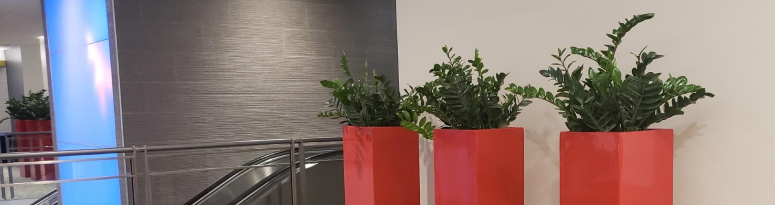
Another unique plant I like to use is the ZZ plant, or Zamioculcas zamiifolia. Not only can this prehistoric-looking plant tolerate a variety of light conditions, but it’s also a good choice for those rooms you may have to skip servicing. Disease-resistant and doesn’t mind neglect, the ZZ is a good pick for those interior offices that can’t be disturbed.
Sansevieria Black Laurentii
A similar choice would be the Sansevieria Black Laurentii, with its ability to handle long periods of missed watering and care.
Palms
Since I’m located in Florida, many of my clients are northern transplants who want a palm tree for their windowless office space. Finding a palm that will remain pretty without a good source of natural light is a challenge, but there are three types that have worked for me.
The most elegant, in my opinion, is the Kentia, which is often used in high-end hotels and pictured in home magazines. With its tall dark green fronds, resistance to spider mites, and ability to tolerate dryness, this is my favorite. Due to the slow growth rate, the Kentia is also one of the most expensive interior plants.
Something more economical is the Chamaedorea seifrizii, or bamboo palm. Keep it on the dry side and check for spider mites frequently; these palms can survive long periods with indirect lighting.
On the short side is the Chamaedorea elegans, generally known as neathebella or parlour palm. Its delicate, feather-like fronds are very pretty, but the maximum height I’ve seen them get in a low-light area is around three feet. In natural light, I’ve had some grow to six feet. Like its cousin, make sure the soil is dry before watering and keep an eye on those nasty spider mites.
Maintenance Advice
One last piece of advice when maintaining plants in dark areas is to be vigilant about water levels. Overwatering is easy to do since the lack of light will retain moisture much longer than a plant by a bright window. I’ve come across plants sitting in five inches of water because the soil wasn’t being tested before watering. In this already difficult foliage situation, the plant is struggling just to make chlorophyll, and if mixed with oversaturated soil, root rot is going to set in immediately. Besides fungi, no plant is going to be happy in those circumstances.
What other low-light plants do you like to use in your installs?
Views: 4,885Share:


Sherry has been part of the interiorscape industry for over fifteen years, starting at an entry level job at North Florida's largest greenhouse and currently owning two horticulture companies. At UMaine, Sherry majored in English where she worked part-time writing scripts for a local college TV studio.

You May Also Like


Leave a Reply
You must be logged in to post a comment.

